A Tenant Application Tool for Better Matches.

A comprehensive tenant application tool that helps landlords find ideal tenants and enables tenants to create standout applications, increasing user sign-ups by 8%.

Project Overview.
Landlords struggle to find suitable tenants due to limited tools that provide all the necessary information for decision-making. Meanwhile, tenants face challenges securing an apartment in a competitive rental market. While our previous application tool was free, we aimed to enhance its features and data presentation to create a premium product for landlords. The goal was to build a comprehensive application tool that offers landlords detailed applicant insights.

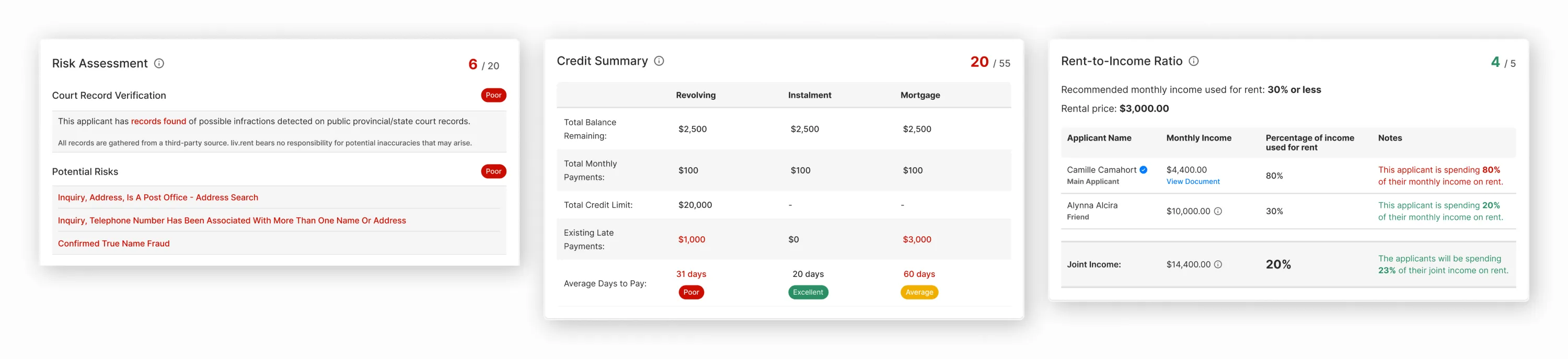
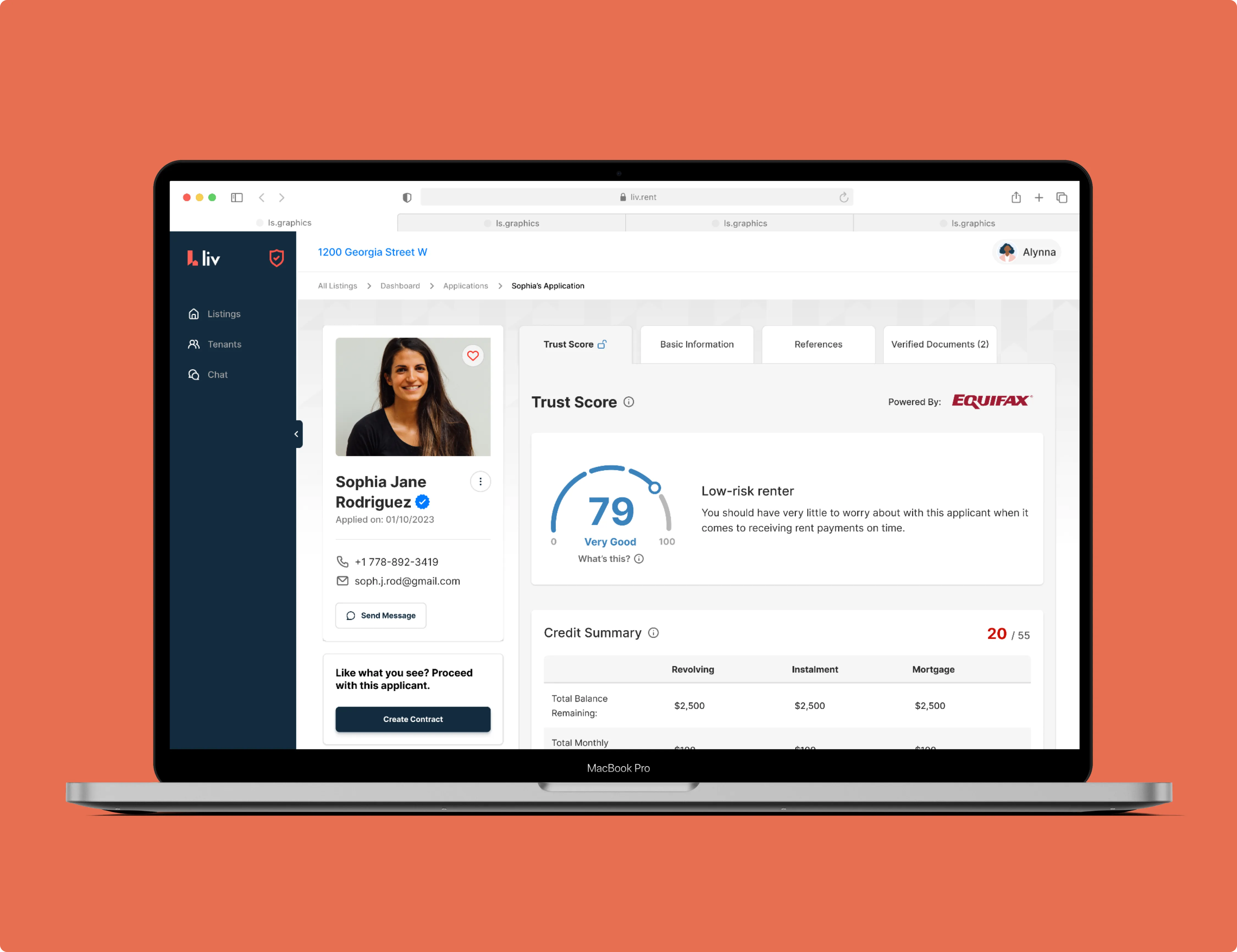
A key component of this application is the Trust Score, our credit check tool that reveals the applicant's financial history. Given the sensitive nature of this information, it was crucial to implement the most intuitive design solution.

This project was huge, with each page containing many edge cases and links to other pages within the feature and within the platform. Constant communication between the design team and the development team was needed to ensure feasibility of the feature
Goal.
Due to the massive scope of this project, the stakeholders and I initially struggled to define clear requirements, but through ongoing dialog we did have two main goals for this feature:
  1. Create an all-in-one application tool that provides landlords with comprehensive tenant information, delivering enough value to justify turning this into a paid tool.
  2. To integrate a credit check tool and streamline the tenant selection process within the platform, ensuring all necessary information is centralized.
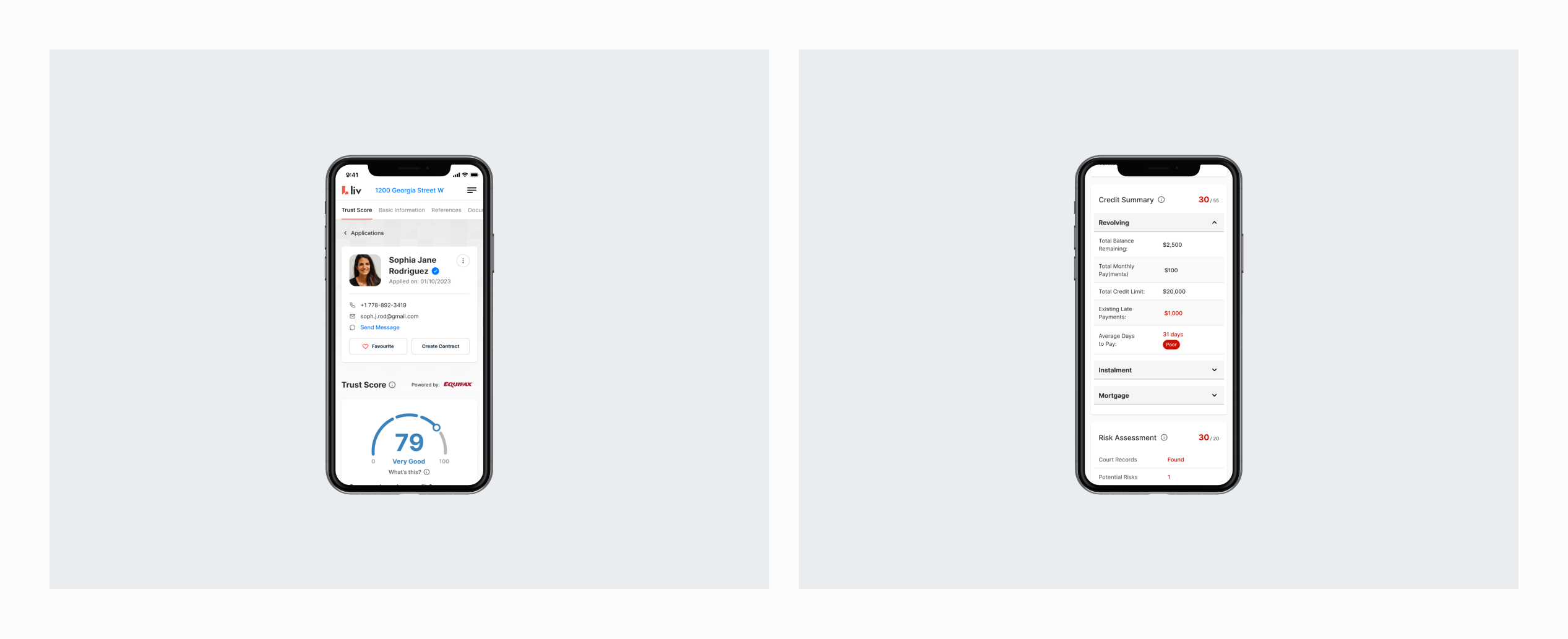
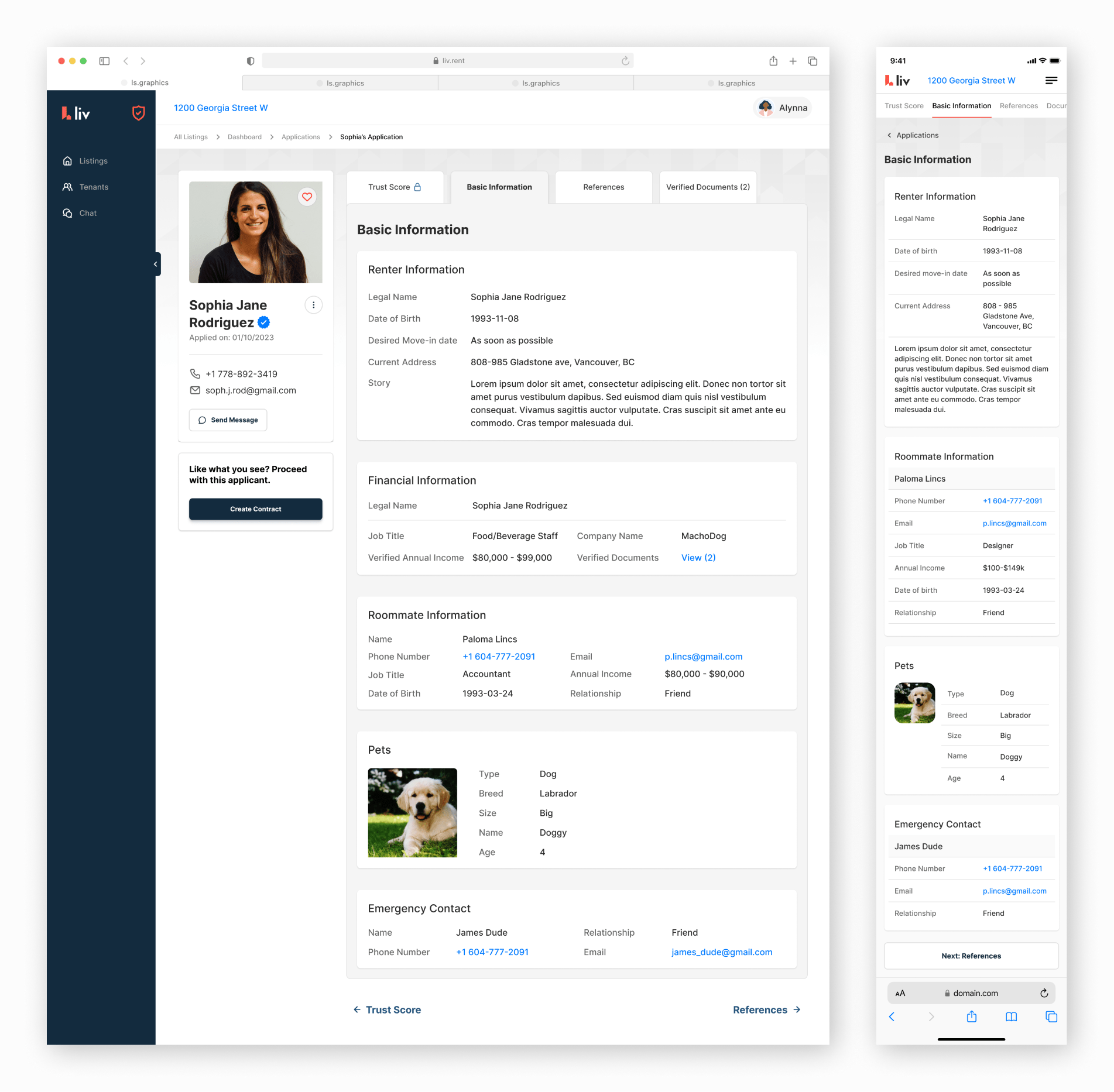
Desktop and mobile designs are side by side
Understanding Landlord Needs.
During team discussions about what landlords would find valuable enough to pay for, we identified two key questions:
  • What was the journey of the landlord to replace their tenants?
  • What do they need to know to make an informed decision on a tenant?
Due time constraints, I spoke with our customer success team and sales representatives to understand user needs and identify the key factors landlords consider when evaluating potential tenants. This was crucial, as selecting the wrong tenant could lead to high turnover and costly issues.
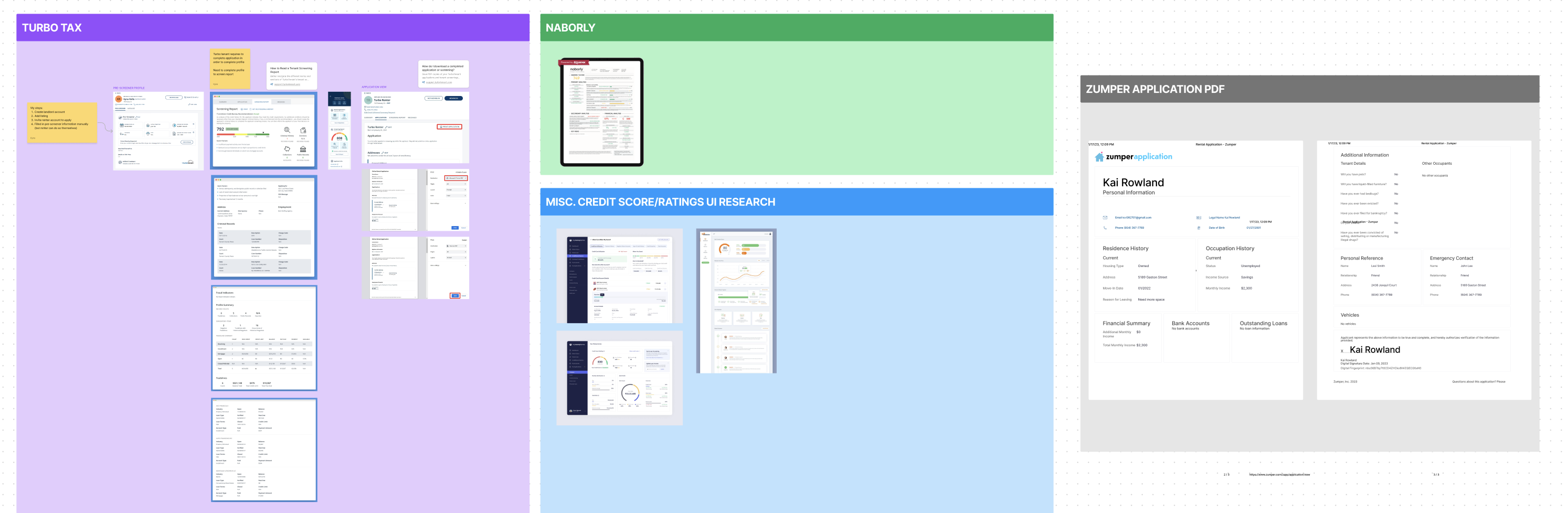
After consulting with the teams, I conducted a competitive analysis to see what features are offered by similar tools such as Credit Karma, Naborly, Zumper, and SingleKey. I was surprised to find that no existing application was as comprehensive as ours, meaning we couldn’t rely on existing patterns. I also performed a heuristic evaluation on our current application design to find design or tech debt that we could resolve during the re-design
Screenshot of figjam board with research
Re-scoping the Project.
After completing my research, I shared my findings with the team and presented key insights. We then discussed the possible functionalities of the tool and the information it would display. This alignment was crucial to ensure everyone was on the same page regarding the scope and direction of the project. I spoke with the developers to ensure the new scope was feasible within the platform and timeframe while keeping them in the loop early on to minimize any friction.
Crafting Flexible Layouts.
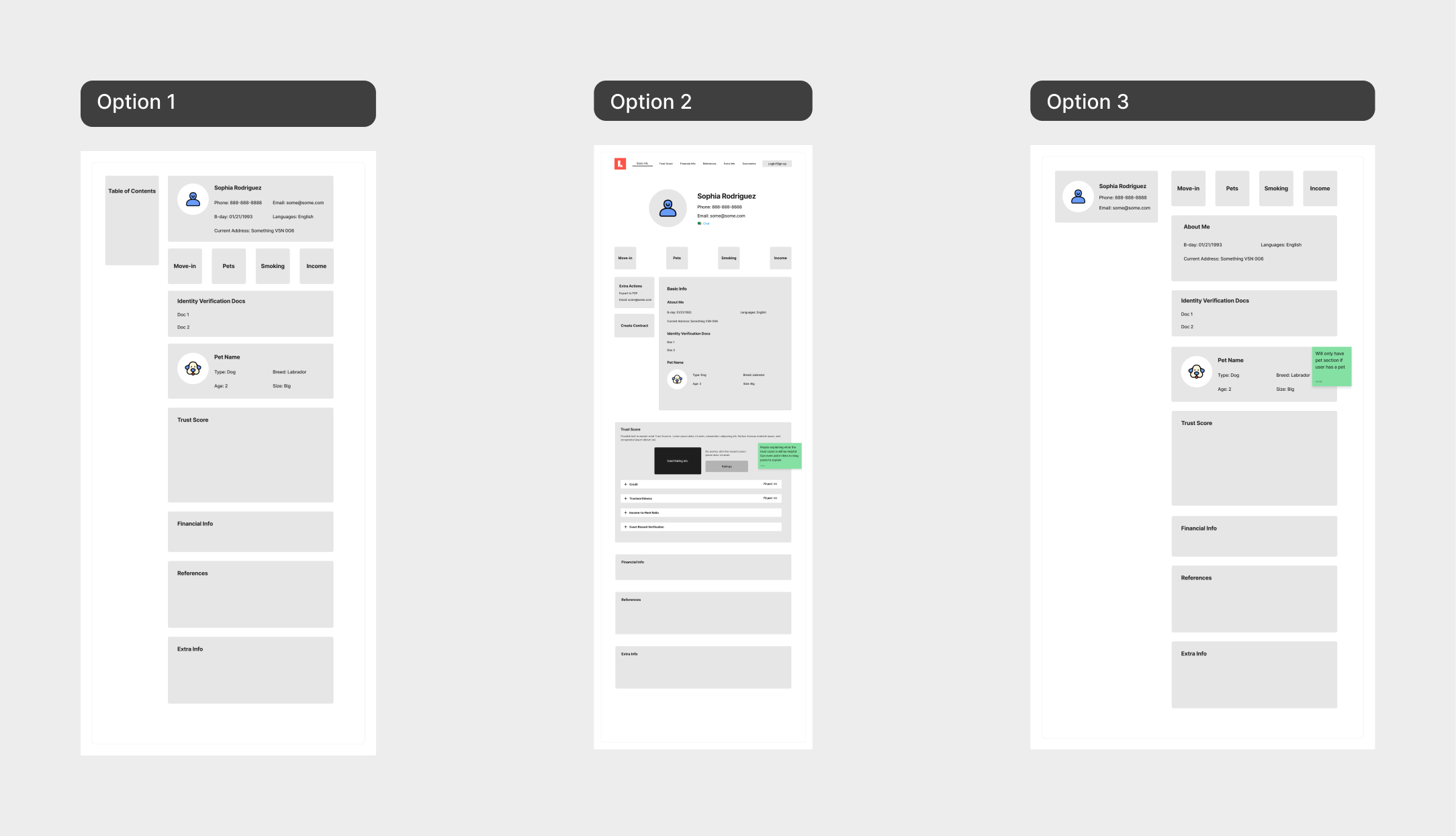
The research highlighted the importance of presenting information as intuitively as possible. During the wireframing process, I explored various solutions to best showcase this information for both desktop and mobile, aiming to create an effective layout that minimizes drop-offs and maximizes comprehension.
A key challenge I identified was making the information intuitive on mobile. To address this, I researched other platforms, such as banking apps, to explore different ways of presenting complex data.
After developing three layout solutions, I shared the wireframes with the stakeholders in a meeting to ensure all stakeholders were aligned and were able to give their feedback.
Wireframes
Since no identical tool existed in the industry, and we needed to present various types of information, I chose to use different layouts tailored to each type of content. To maintain consistency, I grouped sections with similar design patterns before starting the design phase.
During the design phase, we encountered numerous edge cases that led to scope changes. By keeping sections grouped, we managed these changes effectively while ensuring consistency. Regular communication with developers helped maintain feasibility, while ongoing consultations with the project manager allowed us to adjust as needed to align with business goals.
Wireframes
Challenges before Launch.
The scope changed numerous times throughout the entire build, making it challenging to ensure we were meeting user needs.
Additionally, mobile also brought on many challenges, reinforcing the importance of considering mobile designs earlier in the process, and even adopting a mobile-first approach.
Mobile mockups
Conclusion.
In the end, the team and I created an all-in-one application tool that helps landlords and property managers find the best tenants by consolidating everything into a single platform. This feature has not only increased landlords sign ups by 8% but has also become one of the company’s primary revenue drivers.
Navigating this ambiguous space was only possible through strong team dynamics and a foundation of trust among all teams involved in the project.
Other Projects.

Improving communication between landlords and tenants.

Creating an automated messaging tool tailored for our users.
View Project

Streamlining Food Safety & Compliance.

Increased kitchen staff and registered dieticians productivity with their day to day tasks.
View Project